What is Runtime Application Self-Protection (RASP) and how does it protect BFSI mobile apps?
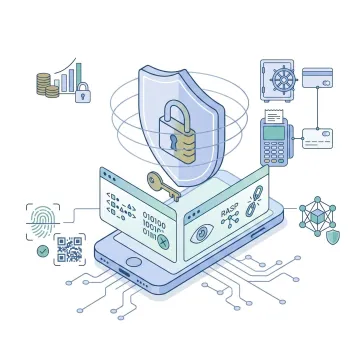
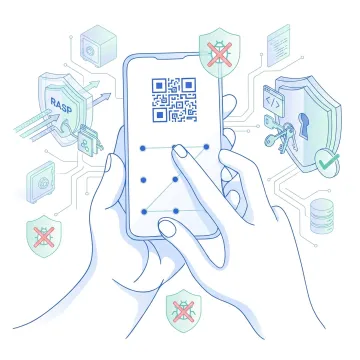
RASP is a security technology embedded directly within a mobile application that monitors and protects the app in real time during execution. For BFSI apps, it detects and blocks threats like runtime hooking, code injection, app tampering, and man-in-the-middle attacks the moment they occur—without relying solely on perimeter defenses. Protectt.ai's RASP engine operates with zero performance overhead, ensuring a seamless user experience alongside robust protection.
What is static protection for mobile apps, and how does it complement RASP?
Static protection secures your mobile app before it runs, primarily through code obfuscation and AES encryption of sensitive keys. It makes the app's source code and business logic unreadable to attackers who attempt decompilation or reverse engineering. When combined with RASP's runtime defenses, static protection creates a multi-layer shield—blocking both pre-execution tampering and live attacks—delivering comprehensive, end-to-end security for BFSI applications.
Which BFSI sectors does Protectt.ai's mobile app shielding support?
Protectt.ai's mobile app shielding is purpose-built for the entire BFSI ecosystem, including retail and commercial banks, insurance companies, NBFCs, stock brokers, trading platforms, asset management companies, mutual funds, digital wallet providers, and payment aggregators. The platform is also trusted by government institutions and enterprise systems that handle sensitive financial data and high-value transactions.
Does Protectt.ai support regulatory compliance for BFSI organizations?
Yes. Protectt.ai is certified under PCI DSS, ISO 27001, ISO 22301, and ISO 42001, and the platform is designed to help organizations meet mandates from RBI, SEBI, NPCI, and other financial regulators. Automated compliance monitoring, real-time threat reporting, and audit-ready dashboards help BFSI teams reduce manual compliance work and stay ahead of evolving regulatory requirements without significant operational overhead.
How does code obfuscation in CodeProtectt prevent reverse engineering of mobile banking apps?
CodeProtectt applies multilayered polymorphic obfuscation to compiled APKs, AABs, and iOS source code, renaming logic, encrypting sensitive keys with AES encryption, and modifying code structure to make it indecipherable to attackers. It supports Java, Kotlin, Swift, Objective-C, React Native, and Ionic. The no-code engine allows rapid deployment without modifying source code, and crash tracking via mapping files ensures developer productivity is unaffected.
What threats does Protectt.ai's RASP protect against in financial mobile applications?
Protectt.ai's RASP engine detects and mitigates a comprehensive range of threats including runtime hooking, app spoofing, reverse engineering, SMS-based OTP attacks, compromised device exploitation (rooted/jailbroken devices), man-in-the-middle (MITM) attacks, unsecured device binding attacks, and social engineering attempts targeting financial app sessions. The AI-driven threat intelligence layer also identifies behavioral anomalies and suspicious transaction patterns in real time.
How quickly can Protectt.ai's mobile app security SDK be integrated into an existing BFSI app?
Protectt.ai is delivered as a lightweight SDK for both Android and iOS that integrates seamlessly into existing mobile development workflows. Most BFSI organizations can achieve full integration within days rather than weeks, with no requirement to rewrite existing business logic. The platform's no-code and low-code options—including CodeProtectt's no-code obfuscation engine—further accelerate deployment while minimizing development resource requirements.
Does mobile app shielding affect the performance or user experience of BFSI applications?
No. Protectt.ai is engineered specifically for zero performance overhead. The multi-layer RASP engine and static protection mechanisms operate silently in the background without introducing latency, battery drain, or UI disruptions. BFSI end-users experience no friction, while security teams gain comprehensive real-time threat visibility. The AI/ML-driven architecture also ensures low false positive rates, preventing legitimate user sessions from being incorrectly flagged or interrupted.