What is security in mobile applications?
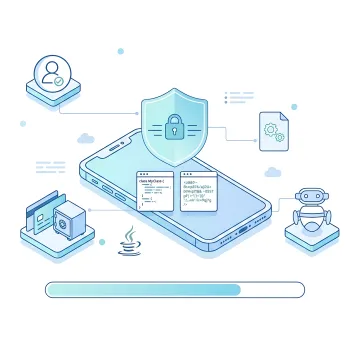
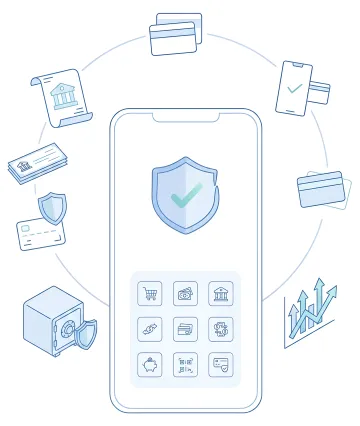
Mobile application security refers to the set of practices, technologies, and controls that protect mobile apps from threats such as reverse engineering, data breaches, malware, runtime attacks, and unauthorized access. For BFSI apps, this includes runtime application self-protection (RASP), code obfuscation, secure device binding, encrypted data transmission, and real-time threat monitoring to safeguard sensitive financial data and user transactions.
What is the mobile application security standard?
The key mobile application security standards include OWASP Mobile Security Testing Guide (MSTG), OWASP Mobile Application Security Verification Standard (MASVS), PCI DSS for payment apps, and ISO 27001 for information security management. For BFSI enterprises in India, regulatory frameworks from RBI, SEBI, and NPCI also define mandatory security controls for mobile banking and payment applications.
What are mobile app attacks?
Common mobile app attacks include reverse engineering (decompiling app code to extract logic or credentials), runtime hooking (manipulating app behavior at runtime), man-in-the-middle (MITM) attacks (intercepting data between app and server), app spoofing (creating fake versions of legitimate apps), SMS/OTP hijacking, jailbreak or root exploits, and malicious overlay attacks. BFSI apps are high-value targets for all these threat vectors.
How does Protectt.ai's RASP technology protect banking mobile apps?
Protectt.ai's Runtime Application Self-Protection (RASP) embeds security controls directly into the app. It continuously monitors app behavior at runtime and can detect and block threats like hooking, tampering, spoofing, and code injection in real time—without requiring network connectivity. With 100+ deep-tech security features and zero performance overhead, it provides active defense even after deployment.
How does Protectt.ai help BFSI enterprises meet RBI and SEBI compliance requirements?
Protectt.ai's platform is purpose-built for regulatory compliance in India's financial sector. AppProtectt and AppBind address RBI Digital Payment Security Controls and NPCI SIM and Device Binding mandates. The SEBI Cybersecurity Framework module covers trading app security requirements for brokers and asset managers. Automated compliance monitoring, audit-ready reports, and ISO 27001 and PCI DSS certifications reduce manual compliance effort significantly.
What is Silent Mobile Verification (SMV) and how does it replace OTPs?
Silent Mobile Verification (SMV) is a passwordless authentication protocol that verifies a user's mobile number possession by initiating a cryptographic handshake between the device's SIM card and the mobile network operator—entirely in the background. It eliminates the need for OTPs, removing the attack surfaces exploited by SIM swap fraud, social engineering, and phishing, while delivering a completely frictionless user authentication experience.
Is Protectt.ai's SDK easy to integrate into existing mobile banking apps?
Yes. Protectt.ai is delivered as a lightweight, easy-to-integrate SDK for both Android and iOS. It is designed for rapid deployment with minimal operational overhead and does not require code rewrites or architectural changes to existing apps. The no-code obfuscation engine for CodeProtectt even allows APK and AAB obfuscation without modifying source code, making integration fast and developer-friendly.
Which industries and enterprise segments does Protectt.ai serve?
Protectt.ai serves Banking, Insurance, NBFCs, FinTech platforms, Stock Trading Companies, Mutual Funds, Asset Management Companies, Government agencies, and digital-first enterprises globally. Its platform is trusted by over 26 leading organizations including RBL Bank, Yes Bank, BSE, Bajaj Finserv, ICICI Lombard, LIC, and Adani, reflecting deep expertise across the entire BFSI ecosystem.