What are the methodologies used by mobile security apps?
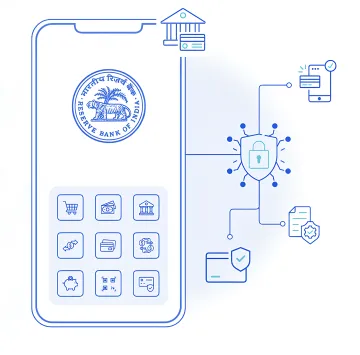
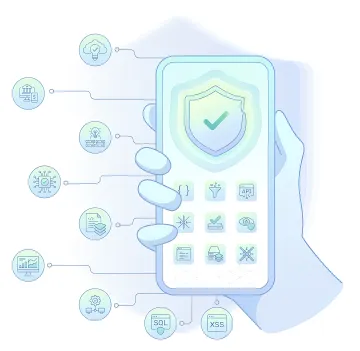
Mobile security solutions employ multiple methodologies including Runtime Application Self-Protection (RASP), code obfuscation, static and dynamic analysis, behavioral analytics, zero trust architecture, AI/ML-based threat detection, and device integrity checks. Protectt.ai combines all of these into one platform, monitoring threats at the application, device, and network layers simultaneously to provide comprehensive 360-degree protection.
What is a best practice for securing mobile app authentication?
A best practice is to eliminate OTP-based authentication in favor of cryptographic, carrier-network-verified methods like Silent Mobile Verification (SMV). Protectt.ai's AppBind and AppSMV solutions verify phone possession directly via the mobile network operator, making authentication phishing-proof and frictionless. Combining this with zero trust device binding and behavioral analytics creates a highly secure, low-friction authentication layer.
How to secure mobile apps?
Securing mobile apps requires a multi-layered approach: integrate runtime protection (RASP) to detect and block in-app attacks, apply code obfuscation to prevent reverse engineering, implement zero trust network security, enforce device integrity checks, and monitor user behavior with AI-driven analytics. Protectt.ai's SDK delivers all of these capabilities for Android and iOS in a single, lightweight integration with 100+ security features.
How do I secure my mobile app?
Start by integrating Protectt.ai's AppProtectt SDK into your Android or iOS application. The SDK automatically applies RASP, code obfuscation, malware detection, jailbreak/root detection, MITM attack prevention, and real-time threat monitoring without requiring security expertise from your development team. This reduces in-house security development time significantly while ensuring enterprise-grade compliance with banking and fintech regulations.
What's the best application security solution?
The best application security solution is one that is AI-native, full-stack, and easy to integrate. Protectt.ai's platform is recognized as the Cybersecurity Company of the Year 2023 and holds a Gartner Peer Insights rating of 4.9/5. It offers RASP, code obfuscation, fraud prevention, and silent authentication in a single SDK, trusted by major banks, insurance firms, and fintech companies globally.
What compliance standards does Protectt.ai support?
Protectt.ai supports a broad range of regulatory frameworks including RBI Digital Payment Security Controls, NPCI SIM and Device Binding requirements, SEBI Cybersecurity and Cyber Resilience Framework, PCI DSS, ISO 27001, ISO 22301, and ISO 42001. Its automated compliance monitoring reduces manual audit preparation time by up to 90%, helping organizations avoid regulatory penalties and stay ahead of evolving mandates.
Does adding mobile security affect app performance?
No. Protectt.ai is engineered for zero performance overhead. The lightweight SDK integrates seamlessly into Android and iOS development workflows without impacting app speed, responsiveness, or user experience. The platform is designed for scale, handling increasing user demand consistently through direct mobile network integrations and a cloud-based security framework built for agility and rapid deployment.
Which industries and platforms does Protectt.ai support?
Protectt.ai serves Banking, Insurance, NBFC, FinTech, Government, Stock Trading, Asset Management, and Enterprise sectors. The platform supports Android (Java, Kotlin, React Native, Ionic) and iOS (Swift, Objective-C) applications. Its solutions are also suitable for cloud-based, on-premise, and hybrid deployments. Major clients include RBL Bank, Yes Bank, BSE, Bajaj Finserv, ICICI Lombard, LIC, and many more leading institutions.